

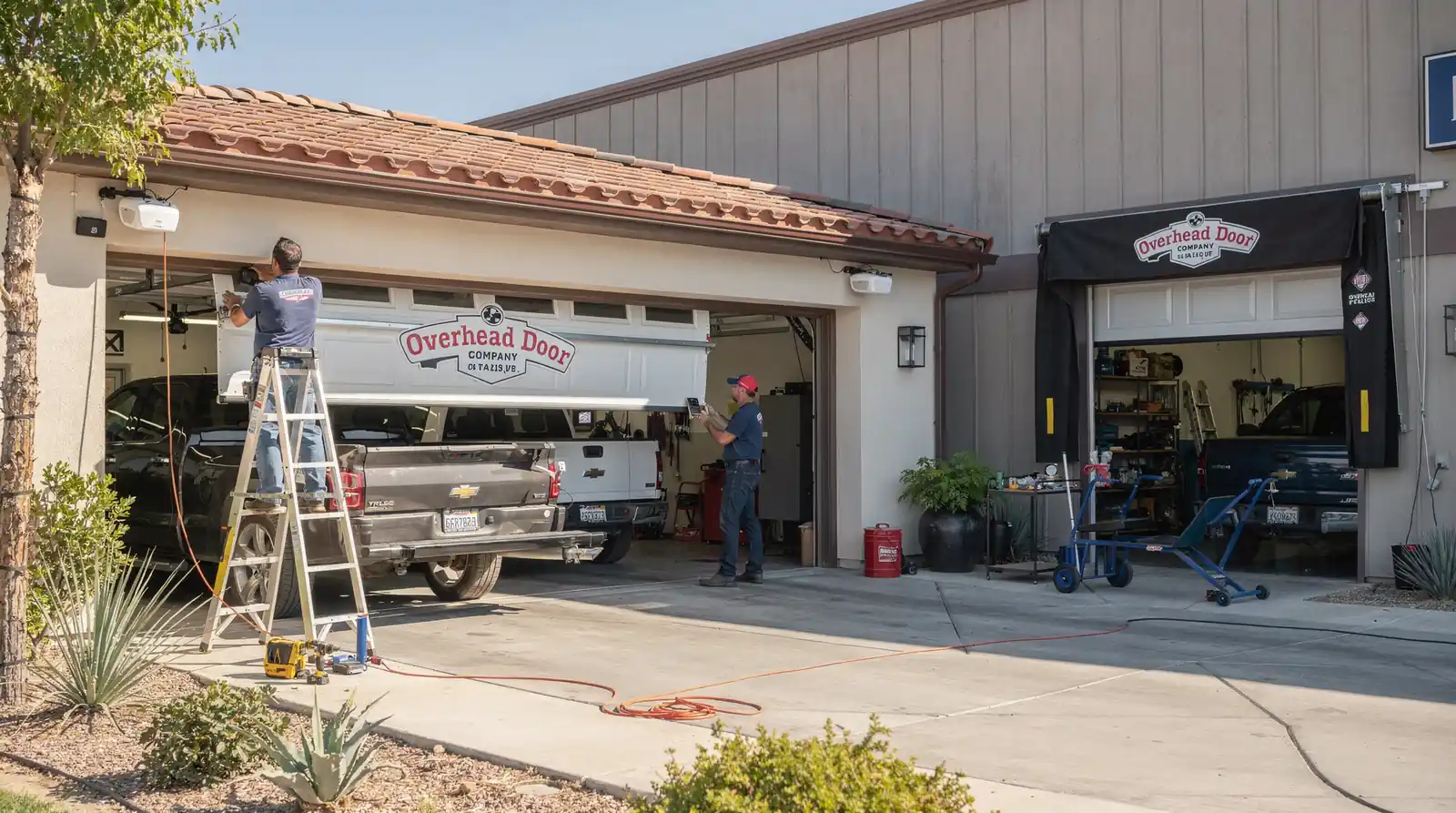
Federal regulations require automatic garage door operators to include an inherent reversal system, mandated since 1993, causing doors to reverse upon contact with an object while closing. Licensed, bonded technicians from Overhead Door Company of the Antelope Valley™ perform code-compliant repairs and installations, ensuring residential. Commercial doors meet current safety requirements and protect occupants from entrapment hazards.
Key Takeaways
Modern garage door standards require auto-reversal systems to stop and reverse doors when detecting obstacles.
Photoelectric sensors detect objects beneath closing doors, triggering immediate reversal to prevent injuries and accidents.
Manual release cords provide emergency access to garage doors during power outages or opener malfunctions.
Automatic garage doors operate at least twice daily in many households, necessitating rigorous safety compliance standards.
What Are the Top Safety Standards for Garage Doors?
An inherent reversal system defines the single most important safety feature on any residential garage door. This mechanism stops and reverses the door the instant it strikes an object while closing, preventing entrapment injuries before they happen. Homeowners, landlords, and facility managers who understand this standard protect residents, tenants, employees, and pets from a hazard that once caused serious harm before modern engineering addressed it.
Skipping this equipment is not an option for property owners who want to avoid liability. A door lacking proper reversal function can trap a child, a pet, or a delivery cart, turning a routine entry into an emergency room visit.
Does a Licensed Technician Matter for Safety Compliance?
Yes. Overhead Door Company of the Antelope Valley provides honest assessments. Code-compliant repairs through a licensed, bonded team, giving property owners documentation that matters during inspections or insurance reviews. A bonded technician carries accountability that unlicensed handyman work simply does not offer.
Who Handles Inspections Across the Antelope Valley?
Overhead Door Company of the Antelope Valley™ prioritizes quick response times for sensor failures and reversal mechanism issues.
Standards compliance depends on more than equipment. Experience shapes how well a technician spots hidden risks. With decades of local expertise, the company brings a history that translates into faster diagnosis of aging systems.
Key elements property owners should verify include:
Functioning inherent reversal system on every operator
Licensed, bonded service documentation
Regular inspection by trained technicians
Prompt correction of any sensor or mechanical failure
Consistent verification of these elements reduces injury risk and supports long-term compliance for any property.
Why Do Auto-Reversal and Sensors Matter?
Auto-reversal and photoelectric sensors stop a closing garage door before it strikes a child, pet, or vehicle. Along with a manual release cord, these features form the core of the top safety standards for garage doors that every opener must meet. Skipping this equipment turns a routine convenience into a genuine hazard, especially in households with young children or pets that dart through the entryway.
A garage door that malfunctions puts three things at risk simultaneously: safety, security, and accessibility. A sensor that fails to detect an obstruction can allow the door to close on a person or object. A door that will not open properly traps vehicles and blocks emergency access. That combination is why sensor upkeep deserves the same attention as lock maintenance or smoke detector checks.
How Can Homeowners Tell If Their Safety Features Still Work?
Periodic testing confirms the system still performs as designed. Homeowners should place a block of wood or similar object in the door’s path and watch for immediate reversal on contact. Sensor alignment matters too. A blinking indicator light or a door that refuses to close often signals a misaligned or dirty photoelectric eye.
What Happens During a Professional Safety Check?
Factory-trained technicians inspect panels, springs, openers, and operators, addressing wear before it causes failure. Response times stay prompt, since a delayed repair on a safety component leaves a household exposed longer than necessary. Regular professional review catches problems that a quick home test might miss, including internal wiring faults or worn reversal mechanisms hidden inside the opener housing.
How Do Federal Rules Regulate Garage Door Operators?
Federal oversight targets one core danger: entrapment beneath a closing door. A dedicated safety standard governs automatic residential garage door operators sold. Installed throughout the United States, setting the baseline that manufacturers must meet before a unit ever reaches a driveway or dealer shelf. That framework works alongside guidance from organizations like ULSE, which shapes how manufacturers engineer automatic doors to protect households nationwide. Together, these rules form the backbone of what many call the top safety standards for garage doors.
What do these standards actually require?
Compliant operators must include mechanisms that stop and reverse a closing door when it meets an obstruction, whether that obstruction is a pet, a bicycle, or a child. Facility managers overseeing multiple properties should confirm every operator on-site — old and new — reflects this baseline before treating it as satisfied.
Why does this matter beyond the manufacturer's factory?
Compliance does not end at installation. Springs wear down, sensors drift out of alignment, and hardware ages regardless of how the unit performed on day one. Broken springs remain one of the most frequent failures homeowners encounter, largely because these components bear the brunt of counterbalancing a door that often weighs several hundred pounds. A worn spring does not just stall the door. It can compromise the reversal behavior the federal standard depends on.
Property owners benefit from a short internal checklist:
Confirm auto-reversal engages on contact
Inspect springs for visible wear or tension loss
Schedule professional evaluation rather than DIY adjustment
Overhead Door Company of the Antelope Valley delivers residential and commercial garage door repair across Lancaster. Palmdale, treating regulatory compliance as a standing priority on every service call, not an afterthought.
Is Your Garage Door Opener Overdue for an Upgrade?
Openers manufactured before 1993 fall short of current safety requirements and warrant replacement. Malfunctioning sensors on any unit, regardless of age, create the same risk. These two conditions form the clearest signal that an upgrade is due. Neither should wait for a breakdown to prompt action.
Following the top safety standards for garage doors means treating the opener as a safety device, not just a convenience feature. A door that reverses properly and senses obstacles protects children, pets, vehicles, and property every time it cycles.
How Often Should a Garage Door Opener Be Inspected?
Professional inspections deserve a spot on every property owner’s annual maintenance calendar. Trained technicians catch sensor drift, worn gears, and wiring issues long before they cause a failure. Regular assessments keep the entire system functioning safely and reliably, reducing the odds of an unexpected malfunction during daily use.
Landlords and facility managers overseeing multiple units benefit even more from a consistent inspection schedule. One overlooked opener creates liability across an entire property.
What Should a Modern Opener Upgrade Include?
A modern upgrade should pair safety compliance with everyday usability. Overhead Door Company of the Antelope Valley™ provides clear keypad instructions alongside smart-enabled opener options, giving property owners both dependable security and remote convenience.
Before committing to any upgrade, customers receive a transparent estimate by phone or in person. That conversation covers:
Age and condition of the existing opener
Sensor and reversal-system performance
Compatibility with smart-enabled features
Overall cost expectations before work begins
This upfront approach lets homeowners and facility managers weigh the true urgency of an upgrade against their budget, with no surprises once the technician arrives.
What Should Commercial Facility Managers Know About Compliance?
Compliance starts with equipment built for demanding, high-traffic environments. Overhead Door Company of the Antelope Valley™ serves commercial facilities, local and federal agencies, and schools, all of which face strict operational and safety standards. Meeting those standards requires more than a door that opens and closes. It requires engineered protection built into the system itself.
Heavy-duty models illustrate what compliant equipment looks like in practice. The RapidFlex high-speed rubber door, for example, pairs breakaway and self-reset technology with infrared obstruction detection, giving facilities layered protection against collisions and entrapment. Wireless reversing safety edges add another checkpoint, catching obstructions the infrared sensors might miss.
Do commercial garage doors need to meet wind load standards?
Yes, especially in facilities exposed to high wind conditions or storm-prone areas. Commercial-grade rubber doors undergo independent wind load testing, with certain models rated to withstand pressures up to 27.0 psf. Facility managers overseeing warehouses, loading docks, or exposed structural openings should confirm a door’s tested rating before installation, not after a failure exposes the gap.
Who backs the equipment once it's installed?
Every commercial project includes manufacturer and labor warranties, and factory-trained technicians handle the installation and service work. That combination matters for compliance recordkeeping: facility managers need documented, professional installation to satisfy insurance and regulatory reviews.
Key features to prioritize in a compliant commercial door system:
Top safety standards for garage doors, including breakaway and self-reset mechanisms
Infrared obstruction detection paired with wireless reversing safety edges
Independent wind load testing with a documented psf rating
Manufacturer and labor warranty coverage installed by factory-trained technicians
Facilities that skip these features risk downtime, liability exposure, and failed inspections down the road.
FAQ
What is the most important garage door safety feature?
An inherent reversal system stands as the single most important safety feature. It stops and reverses the door instantly when it strikes an object while closing, preventing entrapment injuries.
How do photoelectric sensors improve garage door safety?
Photoelectric sensors detect objects beneath a closing door and trigger immediate reversal. This action prevents injuries and accidents before the door makes contact.
Why does hiring a licensed technician matter for safety compliance?
Overhead Door Company of the Antelope Valley™ provides code-compliant repairs through a licensed, bonded team, offering documentation that matters for inspections and insurance reviews. Bonded technicians carry accountability that unlicensed work does not offer.
Conclusion
In closing, garage door safety standards exist to protect your family, employees, and property from preventable accidents and injuries. Understanding these requirements—from proper installation and maintenance to regular inspections. Timely repairs—ensures your door operates reliably for years to come. Overhead Door Company of the Antelope Valley™ remains committed to helping you navigate these standards with expert guidance. Factory-trained service, delivering the dependable solutions your home or business deserves.