

Homeowners facing common garage door problems should first check the opener’s power supply and circuit breaker. Replacing remote or keypad batteries often resolves unresponsive doors. Pulling the emergency release cord manually opens a stuck door. Overhead Door Company of the Antelope Valley provides expert repair services for persistent issues throughout Lancaster and Palmdale.
Key Takeaways
Dead batteries in the remote or keypad stop the signal from reaching the opener.
Pulling the emergency release cord when the door is open risks a sudden, dangerous crash.
Dirty or misaligned photo-eye sensors cause a garage door to reverse before reaching the floor.
Worn metal rollers, hinges, and bearings create grinding or squeaking noises during operation.
What tools do I need to fix my garage door?
A basic toolkit and a safety-first mindset equip most homeowners to diagnose common garage door problems. Overhead Door Company of the Antelope Valley™ emphasizes that many routine checks require only a few household items. Skipping these simple inspections often allows minor issues to escalate into costly failures.
What basic tools should I gather before inspecting my garage door?
A step ladder, a screwdriver, and a can of lubricant form the essential starting kit. These tools let a homeowner check external controls and tighten loose hardware. A visual inspection of tracks and sensors with these basics identifies many common issues before they worsen.
When is a repair too dangerous to attempt without a professional?
High-tension springs and cables demand professional attention. Pulling the emergency release cord when the door is in the open position risks a sudden, dangerous crash. The company provides free estimates to help property owners decide if a repair is safe for DIY work or requires a factory-trained technician.

Why won't my garage door open or close?
A garage door that refuses to open or close often traces back to a few common, fixable issues. Homeowners lose hours of their day and compromise home security when a stuck door blocks vehicle access. The problem typically stems from power interruptions, signal failures, or overlooked manual locks.
What should I check first when my garage door won't respond?
Start with the most basic power checks. The opener must be plugged in securely and the garage circuit breaker must sit in the correct position. A tripped breaker or loose cord cuts all power to the motor, leaving the door immobile. These simple checks resolve many no-response situations before any tools are needed.
How do remote and keypad problems prevent operation?
Dead batteries in the remote control or keypad stop the signal from reaching the opener. Replacing the batteries restores communication instantly. Homeowners should also confirm they are standing within the recommended range and position when pressing the remote. Walls, distance, and interference weaken the signal and cause intermittent failures.
Another overlooked cause is the manual lock. Many garage doors include a slide lock on the inside track. If that lock is engaged, the opener strains against a physically secured door and will not move it. Checking and releasing the lock mechanism eliminates this silent blocker.
When should I use the emergency release cord?
The emergency release cord disconnects the door from the opener trolley, allowing manual operation. This red rope hangs from the trolley assembly. A critical safety rule applies: pull the release cord only when the door is fully closed. Pulling it while the door is open risks a dangerous freefall that can cause injury or property damage. If the door is stuck open, calling a professional is the safer path.
For problems that persist beyond these checks, Overhead Door Company of the Antelope Valley™ dispatches factory-trained technicians who diagnose opener failures and restore safe operation. The company provides free estimates and transparent pricing for repairs across Lancaster, Palmdale, and surrounding communities.
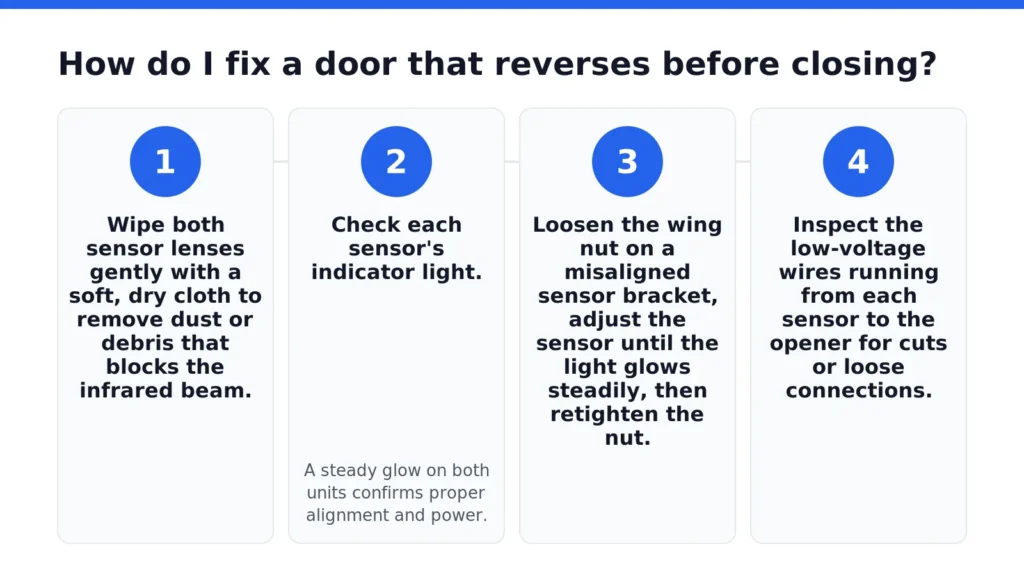
How do I fix a door that reverses before closing?
A garage door that reverses before reaching the floor typically signals a sensor obstruction or misalignment. Dirty or misaligned photo-eye sensors are the most common cause of a door reversing prematurely. These safety devices sit near the bottom of each side track and project an invisible infrared beam across the door opening. When that beam breaks, the opener interprets the interruption as an obstacle and reverses the door to prevent injury or damage.
What causes photo-eye sensors to malfunction?
Sensor problems fall into three categories homeowners can often resolve without professional help. First, dust, cobwebs, or moisture accumulate on the sensor lenses and block the beam. Second, a bump from a ladder, bicycle, or trash can knocks a sensor out of alignment. Third, wiring connections loosen over time from vibration.
Follow these steps to restore proper operation:
Wipe both sensor lenses gently with a soft, dry cloth to remove dust or debris that blocks the infrared beam.
Check each sensor’s indicator light. A steady glow on both units confirms proper alignment and power.
Loosen the wing nut on a misaligned sensor bracket, adjust the sensor until the light glows steadily, then retighten the nut.
Inspect the low-voltage wires running from each sensor to the opener for cuts or loose connections.
When should a professional handle the repair?
If the door still reverses after cleaning and aligning the sensors, the travel limit or force settings on the opener may need adjustment. These internal controls determine how far the door travels and how much resistance triggers a reversal. Incorrect settings cause the opener to mistake normal floor contact for an obstruction. Adjusting travel limits and force sensitivity requires working inside the motor unit where high-voltage components pose a shock risk.
Overhead Door Company of the Antelope Valley™ provides free estimates for sensor and limit adjustments. Factory-trained technicians diagnose the exact cause and restore safe operation without guesswork.
What causes a noisy or sticking garage door?
Noisy or sticking garage doors trace back to worn components, debris buildup, and misalignment. These problems worsen with neglect, turning minor friction into costly mechanical failure.
What makes a garage door suddenly start grinding or squeaking?
Metal-on-metal contact without adequate lubrication accelerates wear. Replacing damaged rollers and hinges restores quiet movement and prevents further damage to the track system.
How do homeowners fix a garage door that sticks during operation?
Clean debris and dirt from the metal tracks to allow smooth movement without resistance. Built-up grime forces the door to work harder, straining the opener motor. A stiff brush removes caked-on residue. Wipe tracks clean with a dry cloth afterward.
Lubrication matters just as much as cleaning. Use a silicone- or lithium-based lubricant on rollers and hinges. Never apply grease or oil to the tracks. Grease attracts dirt and creates a sticky paste that compounds the problem. A light spray on pivot points twice a year keeps operation fluid.
When should a professional inspect a sticking garage door?
Loose brackets or misaligned tracks demand professional inspection. Forcing the door risks bending panels or snapping cables under tension. Homeowners spot trouble by looking for gaps between the track and mounting brackets or visible wobble during movement.
Factory-trained technicians from Overhead Door Company of the Antelope Valley™ safely realign tracks and replace worn parts. The company’s team diagnoses binding points that DIY fixes miss. Prompt professional attention prevents a sticking door from escalating into a complete system failure.
When should I call a professional for garage door repair?
Professional intervention becomes essential when garage door repairs involve high-tension components or structural risks. Homeowners and property managers in the Antelope Valley face serious safety hazards when attempting to fix certain garage door systems without factory training and specialized tools.
What garage door repairs are too dangerous to attempt yourself?
Torsion and extension springs under high tension present a critical danger. These components store enormous kinetic energy and can cause severe injury if mishandled during removal or adjustment. Snapped or frayed lifting cables demand immediate professional replacement. A cable failure risks sudden door collapse, which endangers anyone nearby and damages vehicles or stored property.
How do professional tune-ups prevent future breakdowns?
Scheduled professional tune-ups catch wear before it becomes failure. Multi-point inspections examine rollers, hinges, tracks, springs, and opener force settings. Technicians lubricate moving parts, tighten hardware, and verify balance. This proactive work extends door life and prevents the inconvenience of a stuck door at the worst possible moment.
Overhead Door Company of the Antelope Valley™ provides free estimates and factory-trained service for all high-tension repairs. The company serves Lancaster, Palmdale, and surrounding communities with prompt, code-compliant work that restores safety and reliability.
Frequently Asked Questions
What's the first thing to check when a garage door won't open?
Confirm the opener is plugged in and the circuit breaker hasn’t tripped, then replace the remote or keypad batteries. Also check for an engaged manual slide lock on the inside track, which physically blocks the opener even when it has power.
Why does my garage door reverse before it reaches the floor?
This almost always points to the photo-eye sensors near the bottom of the tracks. Dust, moisture, or a knocked-out-of-alignment sensor breaks the infrared beam, and the opener reverses the door as a safety response. Cleaning the lenses and realigning the sensors resolves most cases.
Is it safe to pull the emergency release cord myself?
Only when the door is fully closed. Pulling the release cord while the door is open disconnects it from the opener trolley and risks a sudden, dangerous crash. If the door is stuck open, call a professional instead of using the release cord.
How often should a garage door get a professional tune-up?
A scheduled tune-up catches wear on rollers, hinges, tracks, springs, and opener force settings before it causes a breakdown. Overhead Door Company of the Antelope Valley™ recommends having a factory-trained technician inspect these components on a regular basis rather than waiting for a failure.
What garage door repairs should homeowners in Lancaster or Palmdale leave to a professional?
Torsion and extension springs, along with frayed or snapped lifting cables, store high tension and can cause serious injury if handled without the right training and tools. Overhead Door Company of the Antelope Valley™ provides free estimates and factory-trained technicians for these repairs.
Conclusion
Knowing which problems require a professional and which you can handle yourself keeps your garage door operating safely and reliably. Start with the simple fixes (cleaning sensors, lubricating moving parts, and checking remote batteries) then call a factory-trained technician for high-tension components like springs and cables or for internal opener adjustments. This approach protects your investment and prevents a minor issue from becoming a costly, dangerous failure.
If your garage door needs professional attention, call Overhead Door Company of the Antelope Valley™. Our factory-trained technicians are ready to help homeowners and property managers throughout Lancaster, Palmdale, and the surrounding Antelope Valley communities.