

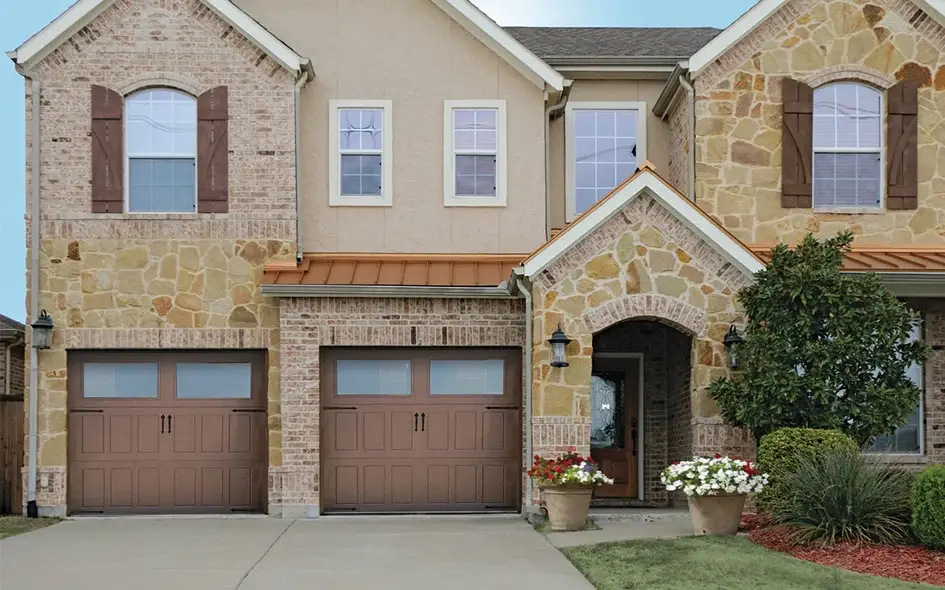
Common garage door problems include doors that refuse to open or close, unresponsive remotes, and misaligned tracks. Homeowners should first check the opener’s power supply, replace remote batteries, and verify the door is not manually locked. If these steps fail, professional technicians provide reliable repairs. Overhead Door Company of the Antelope Valley™ offers factory-trained expertise.
Key Takeaways
Dead batteries cause many intermittent or complete signal failures that homeowners resolve by replacing remote or keypad batteries.
Misaligned or dirty safety sensors trigger doors that stop or reverse unexpectedly, often fixed by cleaning and realigning the sensors.
A snapped torsion spring transfers the door’s full weight to the opener motor, which strains, overheats, and may burn out.
Snapped or frayed lifting cables leave one side unsupported, causing the door to bind in its tracks, tilt, and stop abruptly.
What garage door problems can I fix myself?
Many common garage door problems respond to straightforward homeowner troubleshooting without specialized tools or training. A malfunctioning door that goes unaddressed compromises home security and risks escalating repair costs. Several frequent issues stem from power interruptions, dead batteries, or sensor misalignment rather than mechanical failure.
How do I check if the garage door opener has power?
A non-responsive door often traces back to a simple power disruption. The first step involves confirming the opener is plugged in and the garage circuit breaker sits in the correct position. Loose cords and tripped breakers account for a surprising number of service calls that homeowners resolve in seconds.
What should I do when the remote or keypad stops working?
Dead batteries cause many intermittent or complete signal failures. Replacing the batteries in the keypad or remote control restores function immediately in most cases. Homeowners should also verify they stand within the recommended range and position when using garage door remotes, as distance and obstructions weaken the signal.
Why does the door stop or reverse before reaching the floor?
Misaligned or dirty safety sensors trigger this frustrating behavior. Cleaning the safety sensors and checking their alignment often fixes a door that stops or reverses unexpectedly. Dust, cobwebs, or a slight bump from a broom handle knocks sensors out of alignment and interrupts the infrared beam.
Can I open the door manually during a power outage?
Every garage door includes an emergency release mechanism for manual operation. Pulling the emergency release cord, usually a length of red rope hanging from the trolley, disconnects the door from the opener carriage. This allows manual lifting, though a door with a broken spring becomes heavy and requires extreme caution during operation.
Homeowners who exhaust these steps without resolution face more complex issues like broken springs or damaged cables. Those situations demand professional attention. The company’s guide to common garage door problems and simple fixes covers additional scenarios, including noisy operation and opener malfunctions. Overhead Door Company of the Antelope Valley™ provides factory-trained technicians for repairs beyond safe DIY scope.
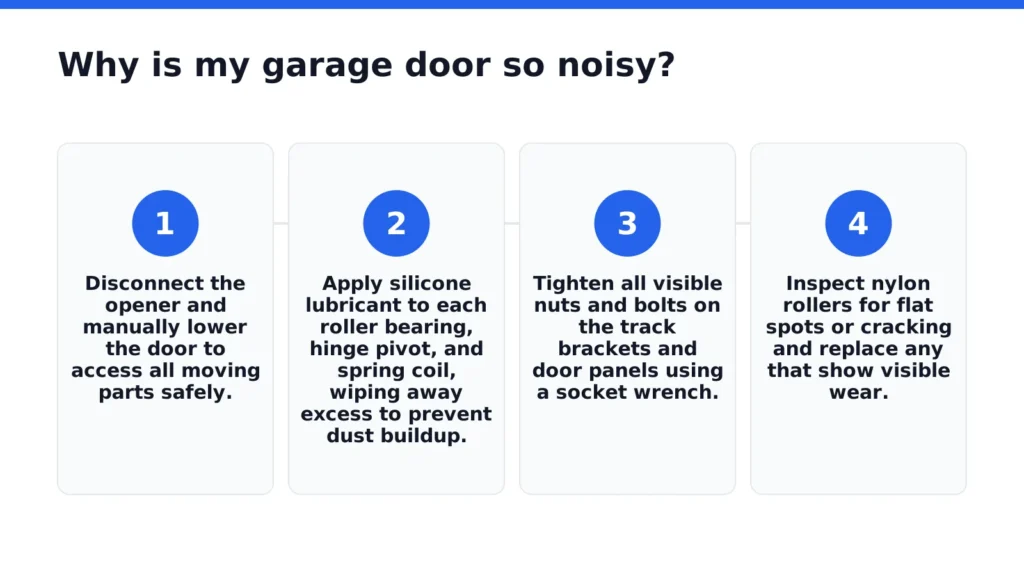
Why is my garage door so noisy?
A noisy garage door signals friction, wear, or loose components that demand attention. Ignoring these sounds allows minor issues to escalate into costly repairs and compromises home security. Common Garage Door Problems like grinding, squeaking, and rattling trace back to specific mechanical failures that homeowners can diagnose before calling a technician.
What causes a grinding or squeaking sound?
High-friction metal rollers and hinges that lack proper lubrication produce grinding and squeaking noises. Worn-out nylon rollers or loose hardware create similar sounds as metal parts scrape against tracks or mounting brackets. The Antelope Valley’s dry climate, persistent wind, and airborne dust accelerate wear on these moving parts, stripping away protective lubricant faster than in milder environments. Without intervention, the friction damages rollers, hinges, and eventually the opener motor itself.
How can homeowners quiet a noisy garage door?
Routine lubrication with silicone or white lithium grease reduces friction and extends the life of rollers and hinges. Homeowners should follow these steps:
Disconnect the opener and manually lower the door to access all moving parts safely.
Apply silicone lubricant to each roller bearing, hinge pivot, and spring coil, wiping away excess to prevent dust buildup.
Tighten all visible nuts and bolts on the track brackets and door panels using a socket wrench.
Inspect nylon rollers for flat spots or cracking and replace any that show visible wear.
Loose hardware rattles against the door frame during operation, so tightening fasteners eliminates that noise immediately. When lubrication and tightening fail to quiet the door, the issue likely involves worn rollers or damaged hinges requiring professional replacement. Homeowners who notice persistent noise should watch for signs their garage door needs immediate service before the problem worsens. Overhead Door Company of the Antelope Valley™ provides factory-trained technicians who diagnose noise sources and restore quiet, reliable operation.
What if my door feels heavy or stops halfway?
A garage door that feels unusually heavy or halts midway through its cycle signals a serious mechanical failure. The most common culprit is a snapped or fatigued torsion spring, a component under extreme tension that counterbalances the door’s weight. Without that counterbalance, the door becomes dead weight. A homeowner attempting to force it open risks the door crashing down, causing property damage or severe injury.
Why does a broken spring make the door so heavy?
Torsion springs do the actual lifting. The opener motor simply guides the movement. When a spring snaps, the full weight of the door transfers entirely to whoever tries to lift it. The opener motor cannot compensate. It strains, overheats, and may burn out if repeatedly activated against that load. This is not a gradual decline. The failure is immediate and unmistakable.
Could the cables be the problem instead?
Snapped or frayed lifting cables produce similar symptoms. These steel cables work alongside the springs to raise and lower the door evenly. A broken cable leaves one side unsupported. The door then binds in its tracks, tilts, and stops abruptly. Visual inspection often reveals a dangling or visibly damaged cable. The door should not be operated until a professional assesses the damage.
High-tension spring and cable repairs are never DIY projects. The stored energy in a wound torsion spring can release without warning, causing catastrophic injury. Factory-trained technicians handle spring and cable replacements to ensure safety and proper tension. The company dispatches experienced professionals who follow strict safety protocols, replace components with manufacturer-spec parts, and verify balanced operation before completing the job.
Homeowners facing these common garage door problems should immediately disconnect the opener and leave the door closed. A heavy, partially open door places unpredictable stress on every remaining component. Delaying professional repair often turns a single broken spring into damaged tracks, bent panels, and a ruined opener. The full scope of related failures is detailed in the company’s guide to common garage door issues, which outlines repair solutions for spring, track, and opener malfunctions.
Why does my garage door close unevenly or jam?
A garage door that closes unevenly or jams mid-operation signals a mechanical problem requiring prompt attention. Damaged or obstructed tracks cause the door to bind, close unevenly, or jam during operation. Uneven spring tension or drum slippage makes one side of the door lower than the other. Ignoring these symptoms leads to complete system failure and potential safety hazards.
How can a homeowner safely test door balance?
Homeowners can safely test door balance by disconnecting the opener and manually lifting the door halfway. A properly balanced door stays in place when lifted halfway. If the door falls or rises on its own, professional adjustment is needed. Never attempt to adjust torsion springs without factory-trained expertise.
What causes one side of the door to sit lower?
Uneven spring tension or drum slippage creates the imbalance. The cables on each side must maintain equal tension. When one cable slips or a spring weakens, the door tilts. Track damage compounds the problem. Obstructed or bent tracks force the door out of alignment during travel.
Follow these steps to diagnose the issue safely:
Disconnect the automatic opener using the emergency release cord.
Manually lift the door to the halfway point and observe its position.
Check both vertical tracks for visible bends, gaps, or debris accumulation.
Inspect the lift cables on each side for fraying or slack.
Note whether the door drifts up or down from the halfway position.
A door that fails the balance test requires immediate professional service. Track obstructions sometimes clear with careful cleaning. Bent tracks and spring issues demand specialized tools and training. Overhead Door Company of the Antelope Valley™ dispatches factory-trained technicians who restore proper alignment and tension. Delaying repairs risks spring breakage, which releases stored kinetic energy capable of causing serious injury.
When should I call a professional for garage door repair?
Professional intervention becomes necessary when a garage door exhibits symptoms that exceed basic troubleshooting. A door that reverses immediately after touching the ground signals a problem with the travel limit or sensitivity switches. These components require precise calibration to prevent safety hazards and operational failures.
Common Garage Door Problems that demand expert attention include erratic opener behavior. Logic board wear or electrical surge symptoms cause unpredictable movement patterns. A technician diagnoses these electronic faults with specialized equipment. Homeowners risk further damage by attempting circuit-level repairs without proper training.
What symptoms indicate a serious garage door problem?
Several warning signs point to issues beyond DIY fixes. A door that slams shut or reverses before closing completely indicates sensor misalignment or limit switch failure. Grinding noises from the opener motor suggest gear wear that worsens with continued use. Sagging sections or visible cable fraying create immediate safety risks.
How do professionals diagnose complex garage door issues?
Factory-trained technicians follow a systematic diagnostic process. The inspection begins with a visual assessment of tracks, springs, and cables. Next comes a balance test to evaluate spring tension and door weight distribution. An auto-reverse test confirms the safety mechanism functions correctly. These monthly inspection routines, including visual checks, balance tests, and auto-reverse tests, prevent major failures when performed consistently.
Overhead Door Company of the Antelope Valley™ provides transparent estimates by phone or in person for all repairs. The company’s technicians service many older door and opener models when parts remain available. Homeowners seeking comprehensive guidance on repair processes can review residential garage door repair resources that detail common issues and service expectations. Prompt professional assessment stops minor malfunctions from escalating into complete system failures.
FAQ
What garage door problems can I fix myself?
Power interruptions, dead remote batteries, and misaligned or dirty safety sensors respond to straightforward homeowner troubleshooting without specialized tools.
Why does my garage door stop or reverse before reaching the floor?
Misaligned or dirty safety sensors trigger this behavior. Cleaning the sensors and checking their alignment fixes a door that stops or reverses unexpectedly.
What should I do when my remote or keypad stops working?
Replace the batteries in the keypad or remote control. Verify you stand within the recommended range and position, as distance and obstructions weaken the signal.
Conclusion
Addressing these common garage door problems promptly protects your property and your family. A professional assessment identifies the root cause and restores safe, reliable operation. Homeowners who schedule timely service avoid the expense and danger of complete system failure. Trust factory-trained technicians to perform the necessary repairs and verify the door operates correctly before you resume normal use. Your next step is clear: contact a licensed professional for an accurate diagnosis and lasting solution.